Portage County Historical Society
Vice Admiral Albert Weston Grant
April 14-1856-September 30, 1930
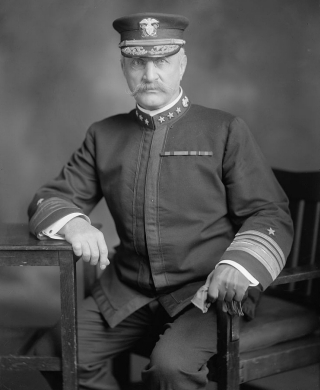
“Albert Grant started for Annapolis last Monday,” reported the Stevens Point Journal on June 4, 1873. “He will undoubtedly pass the examination and has the requisite ability to become a leader in his class.”
Born in East Benton, Maine in 1856, he came to Stevens Point as a boy with his parents, the E.B. Grants, who were prominent early day residents of the city of Stevens Point. He attended the “Old White School” along with two brothers and a sister. During the Civil War, his father enlisted in Company B, Forty-sixth Wisconsin infantry. This unit saw action principally in northern Alabama and he served from February 14, 1865 until September 27, 1866.
 Moving your cursor over the ship's name will display a photo of the ship.
Link to Grant Family visit to Stevens Point, April 6-7, 2017.
Link to Society's World War I programs.
Link to Vice Admiral A. W. Grant Park dedication (video).
Link to "Over There" presentation, April 6, 2017.
Moving your cursor over the ship's name will display a photo of the ship.
Link to Grant Family visit to Stevens Point, April 6-7, 2017.
Link to Society's World War I programs.
Link to Vice Admiral A. W. Grant Park dedication (video).
Link to "Over There" presentation, April 6, 2017.
Albert was appointed Cadet Midshipman from Wisconsin June 10, 1873 at the Annapolis Naval Academy and graduated on June 20, 1877. He was commissioned Ensign May 17, 1881. Following service on USS PensacolaUSS Pensacola, USS LackawannaUSS Lackawanna, USS AllianceUSS Alliance, USS PassaicUSS Passaic, USS IroquoisUSS Iroquois, he served ashore at the Norfolk Navy Yard, received torpedo training, and served briefly at the Naval War College. During his early career he served on the TrentonUSS Trenton, RichmondUSS Richmond, SaratogaUSS Saratoga and YorktownUSS Yorktown.
While he was assigned to the Mare Island Navy Yard, he supervised pioneering work in the application of electricity to USS Pensacola at the Norfolk Navy Yard. He oversaw similar upgrades to the CharlestonUSS Charleston in 1889 and the San FranciscoUSS San Francisco in 1890. These were the earliest installations of electric plants in U.S. warships, a revolutionary development in naval capabilities. He was commissioned Lieutenant May 9, 1893.
On May 9, 1893, his commission as a lieutenant reached him while he was serving on the gunboat USS ConcordUSS Concord. A tour in cruiser San Francisco ended in the summer of 1894 when Grant was ordered back to the Naval Academy for duty as an instructor. Detached some three years later, he returned to sea on Helena. During the Spanish-American War in 1898, he served on the battleship MassachusettsUSS Massachusetts off the coast of Cuba and participated in the Battle of Santiago, Cuba. After the war, he was assigned to the MachiasUSS Machias. He was promoted to Lieutenant Commander on July 1, 1900 and was ordered to duty at the Naval Academy in Annapolis.
In 1902-1905 he was in East Asia as the Executive Officer on the battleship OregonUSS Oregon and later took command of the ship. In 1905 he was promoted to Commander and assigned to duty at the Naval Academy. During this assignment he prepared a study of naval tactics, The School of the Ship, which became a standard textbook for the Naval Academy students for many years. After duty at the Naval Academy and completing a course at the Naval War College in 1907, Grant commanded the USS ArethusaUSS Arethusa, the fuel tender to the Great White Fleet’s destroyer flotilla, a flotilla sent out by President Theodore Roosevelt. Grant took the around Cape Horn to the Pacific.
In 1910 he was made Commandant of the Fourth Naval District and the Navy Yard, Philadelphia, Pennsylvania and served there until 1913. In July 1913 he was assigned to the Newport News Shipbuilding Company for duty in connection with the completion of the USS TexasUSS Texas and assumed command when she was commissioned on March 12, 1914.
On June 3, 1915, he was appointed Commander Submarine Force, Atlantic Fleet, and in July 1917 was given command of the Battleship Force ONE, Atlantic Fleet, with the rank of Vice Admiral.
In March 1919 after service in the war, he was appointed Commandant of the Washington Naval Yard and Superintendent of the Naval Gun Factory, reporting for duty in his permanent rank of Rear Admiral.
In an article in the Army and Navy Register reported on his transfer of duty as follows:
Takes Leave of Fleet
"On March 31, 1919, at Hampton Roads, Va., Vice Admiral A.W. Grant, U.S. Navy relinquished command of battleship force No. 1, consisting of 24 battleships of the pre-dreadnought type, namely the Minnesota (flagship)USS Minnesota, VermontUSS Vermont, MichiganUSS Michigan, South CarolinaUSS South Carolina, ConnecticutUSS Connecticut, LouisianaUSS Louisiana, KansasUSS Kansas, New HampshireUSS New Hampshire, VirginiaUSS Virginia, New JerseyUSS New Jersey, Rhode IslandUSS Rhode Island, NebraskaUSS Nebraska, GeorgiaUSS Georgia, MissouriUSS Missouri, Maine, OhioUSS Ohio, WisconsinUSS Wisconsin, AlabamaUSS Alabama, IllinoisUSS Illinois, KentuckyUSS Kentucky, KearsargeUSS Kearsarge, IndianaUSS Indiana, IowaUSS Iowa and MassachusettsUSS Massachusetts. At 5 p.m. of that date the crew and officers were lined up on the quarter deck of the Flagship Minnesota, when Vice-Admiral Grant appeared on deck, and in a deep strong voice, read the orders from the Navy Department detaching him from command afloat and ordering him to duty ashore in command of the navy yard and naval gun factory, Washington D.C. The Admiral then bade good-bye to his staff and to officers of the flagship in turn while he proceeded to the gangway for leaving the ship. At this instant the band and guard brought everyone to the salute by customary “present arms’ to the guard, accompanied by ruffles, flourishes and the admiral’s march by the band. The admiral, accompanied by his chief of staff and flag lieutenant, entered his barge alongside and as the small swift boat cleared the side, the gunner ordered the saluting guns to bark forth the 15-gun salute as a farewell honor to the admiral who had so successfully conducted the affairs of the force during his period of command from August 20, 1917 to March 31, 1919. At the last gun, the three-starred blue flag, emblem of his rank, was slowly lowered from the main trunk. As this ceremony probably ended the last sea command of one of the most able and practical officers in the naval service, it was an event of especial importance to those who know and realize his value.Undertook Big Job
At the beginning of the war in April 1917, most of the battleships, which were organized in August into battleship force No. 1 under the command of Vice-Admiral Grant, had been tied up in the navy yards ‘in reserve’ with only a nucleus crew. After war was declared, the complements of these vessels were completed by assigning navel militia men, reserve force men, and raw recruits to them. Admiral Grant was given the job of ‘whipping’ these untrained personnel into shape, and to utilize the vessels composing the force for training enlisted men and officers for the general naval service, that it might be possible to man the many ships taken over and built incident to the naval expansion and to fill the gap for which the Navy was not previously prepared, and to fill it rapidly.Career Is Notable
During his career in the service, which began in 1873, the year of entering the naval academy, Admiral Grant has been noted for his loyalty, unlimited energy and devotion to duty, with the thought of promoting and maintaining efficiency in the naval service. He has served in numerous vessels, and in varied capacities, all of which may be marked with the word ‘success.’ Among them may be mentioned the Massachusetts during the Spanish-American War, chief of staff to Rear Admiral Sperry during the well-remembered cruise of the fleet around the world, command of the USS Connecticut, command of the USS Texas, and command of the submarine force, from which he went to his late command. In this connection it may be well to say that through his efforts and influence the submarine force was organized and that it was made possible to lay down the first practical submarine, the 800-ton type, for our service. He also established the present submarine school and base at New London for training submarine personnel and planned the bases now established at other points on our coasts.Concerning shore duty, he spent at least two tours at the naval academy and a tour as commandant of the Philadelphia navy yard.
In leaving his flagship, he [Grant] stated: “The old must give way to younger blood; this is the penalty for growing old, but I feel young.” And young he is, both in body and mind, even though he is due for age retirement in April, 1920.
The service afloat will greatly miss the progressive influence of Admiral A. W. Grant.”
He was awarded the Navy Distinguished Service Medal and cited as follows: “For exceptionally meritorious service in a duty of great responsibility as Commander of Battleship Force ONE, Atlantic Fleet, and further for he efficient manner in which he commanded the Atlantic Fleet in the western Atlantic in the absence of the Commander-in-Chief during September, October, November and December 1918".
He retired on April 14, 1920 upon reaching the statutory retiring age of sixty-four years. He died in Philadelphia on September 30, 1930.
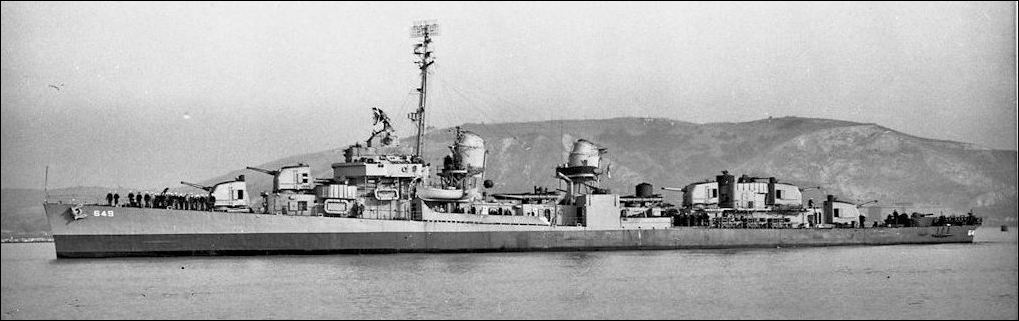
On November 24, 1943, the USS Albert W. Grant (DD-649), a Fletcher-class destroyer was commissioned for service in the United States Navy during World War II. The naming of a ship in honor of an Admiral is a rare honor and is a fitting tribute to this distinguished man who served his country for many years.
Additional service record available at Wikipedia.