Portage County Historical Society
DUBAY’S WIVES
(See also Brief History of John DuBay)
DUBAY’S WIVES
About 12 miles north of Stevens Point on Old 51 stands an historical marker erected in 1962 by the State Historical Society of Wisconsin. The marker calls attention to the one time trading post kept by John DuBay on the east bank of the Wisconsin River today covered by the waters of Lake DuBay. The marker also states that DuBay was married to “Princess Madeline,” a daughter of Oshkosh, chief of the Menominee Indians in the 1840s and ‘50s.
In the light of mare recent research, this information appears to be wrong. In composing the wording for the marker, the directors of the Portage County Historical Society (of which I was one) leaned heavily on a book written by Merton E. Krug called DuBay: Son-in-Law of Oshkosh, published in 1946.
As the title of the book implies, DuBay was allegedly a son-in-law of Oshkosh through marriage with his daughter, “Princess Madeline.”
In the 1830s and 1840s DuBay conducted a far-reaching trade with the Indians of northern Wisconsin and upper Michigan, working both as an agent for the American Fur Co. and for himself.
Through his knowledge of the Indians he had known around Green Bay, where he grew to manhood, and his knowledge of their language, he grew rich even though unable to write his own name.
In 1857 his luck changed when he shot and killed William Reynolds at Fort Winnebago (Portage) in a property dispute. He was arrested and, since his lawyers did not think he could get a fair trial in Columbia County, a change of venue to Dane County was ordered by the court.
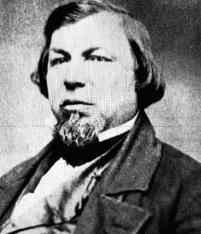
John Baptiste DuBay was half Indian by descent from a Menominee Indian princess, half French through his Canadian-born father. Louis Dubay. He was a hunter, fur trader, interpreter, linguist, stage line operator, sawmill owner, and town site promoter. Lake DuBay, lying partly in Portage County and mostly in Marathon County, is named after him.
DuBay was charged with murder in the first degree, and in two trials held in 1857 and 1858, two different juries failed to agree on a verdict and he was released on a technicality.
In the course of the first trial, as recorded by Krug in his book, six references are made by witnesses either to a “princess” or to DuBay as the son-in-law of Oshkosh, But nowhere in the entire testimony is there any given name associated with the “princess”
Krug apparently used the name “Princess Madeline” on the strength of the 1850 census which indicates clearly that a female by the name of “Madelane” was DuBay’s wife at the time and presumably the mother of the children, or at least some of the children listed in the 1850 census.
At the time I helped compose the wording for the marker, the late Marie Swallow, one of our society members, took exception to the “Princess Madeline” interpretation and said there was no evidence that Oshkosh ever had a daughter by that name.
Since that time further research on the subject forces me to concede that Miss Swallow was at least half-right and I was half-wrong. John DuBay was married to or living with someone named Madeline or Madelane. There can be no doubt about that, but it seems that she was not the daughter of Oshkosh.
In his book, Krug cites the United States census for 1850 which lists the DuBay family in this order, with age and place of birth at the right of the column:
| Name | Age | Place of Birth |
| John DuBay | 50 | Wisconsin |
| Madelane | 30 | Michigan |
| Louis | 19 | Wisconsin |
| Louisa | 14 | Wisconsin |
| Charles | 12 | Wisconsin |
| Rose | 9 | Wisconsin |
| Moses | 3 | Wisconsin |
I have checked this information against the original microfilm and find it to be correct. The enumerator used the spelling Rose for the fourth child although I am confident it should have been Rosa, an abbreviation for Rosalie, a common name among mixed-blood families at the time.
However, if Louis, the oldest son, was 19 years old in 1850, then he must have been conceived in 1830 when his mother was 10 years old! Patently, there is something wrong here. She must have been 40 years old, at least, which would strongly suggest that she was not a daughter of Oshkosh who was born in 1795.
But, was Madeline the only wife of John Baptiste DuBay? Her name follows her husband’s, which is usual in a census enumeration, and even if the enumerator sensed there was more than one wife in the household, he would not have recorded it because this would have been bigamy.
Now consider this, on January 6, 1846, two DuBay children were brought to Father Theodore Van den Broek, a pioneer Catholic missionary to Wisconsin, for baptism.
The ceremony was most probably held in Green Bay or Little Chute. According to his own baptismal records, still preserved at St. John Nepomuc church in Little Chute, a daughter, Rosa, and a son, Moses, were baptized that day, both the children of John Baptiste DuBay and “Maria LeClaire.”
There can be little doubt about who this particular John Baptiste DuBay was because the sponsors at the baptism for Moses were Bosil DuBay and Agatha DuBay, probably Bosil’s wife. Bosil was a half-brother of John DuBay.
Van den Brook also records that Rosa was born in 1841, which corresponds to the 1850 census, but he fails to give the age of Moses. The census says he was three years old in 1850 and on this basis he could not have been baptized in 1846, but census enumerators were often confused in giving the age of a member and it is easy to imagine that the interpreter for the enumerator could have made an error as well.
It is my belief that the last three children listed in the 1850 census cited by Krug are all the children of “Maria LeClaire” DuBay, and the first three, Louis, Louisa and Charles, are the children of Madeline.
It is also my belief that Madeline was a Chippewa woman, someone DuBay met in the Lake Superior country or at Sault Ste. Marie where he was once stationed. The fact that the census shows that she was born in Michigan, no doubt the Upper Peninsula, lends credence to the assumption that she was of Chippewa origin.
Meanwhile, I recently became aware of an account book kept at a trading post in Green Bay by Francis Desnoyers in the 1840s. From the names of the customers, it seems clear that most of them were either of French-Indian descent or full-blood Indians, several of them chiefs of bands.
To help keep track of his customers, Desnoyers made comments after each name: for example, where the customer lived, or to whom he or she was related, etc.
On page 66 appears the account of “Lisette” and after her name a comment by Destoyers: “Oshkosh daughter.” The account, not a long one, begins May 23, 1846, and runs to November 2, 1847. The purchases were for worsted materials, beads, tea, silk, soap and silk hankies. (The hankies were worn by the Indian women as head covers.)
Nearly two years after the last entry in the account book was made, Lisette was in Green Bay to claim her share of a special “payment” which the Menominee tribe of Indians was making in favor of their “cousins,” that is, the mixed-bloods. Several of the DuBays were there, including Louis DuBay, Bosil DuBay, and Angelique DuBay, a bait-sister of John DuBay. (She later married Richard Downey.)
The names of Louis, Bosil and Angelique DuBay appear in the Green Bay Advocate for June 28, 1849, on three separate lines in the list of recipients entitled to the special “payment.” In the next, or fourth line under the three names above, appears this entry: “Lisette DuBay and children.” Further down the list, out of alphabetical order, appears “Jean Baptiste DuBay and children.”
The marital status of each recipient is usually given in the list which appeared in the Green Bay newspaper, whether he or she had any children, etc. Madeline’s name is not included with her husband and children because she was probably of Chippewa origin and therefore not entitled to the “payment” which had been earmarked for mixed-bloods of Menominee descent only.
Since DuBay was of French-Menominee descent, he and his children were entitled to their share, although he also claimed to be part Chippewa whenever it suited him.
The list in the Advocate mentions “Lisette DuBay and children” which means she had more than one child with her. Thus, it would appear that if John DuBay was still married to or living with Madeline in 1850, as the census indicates, then he was also carrying on an extra-marital arrangement with a younger woman whom I believe was the real daughter of Chief Oshkosh.
As mentioned earlier, no one at the trial held in Madison in 1857 ever mentioned the first name of Oshkosh’s daughter, the so-called “princess.” No one ever mentioned where DuBay married her, if, in fact he ever did. The evidence suggests that “Lisette-Maria LeClaire” was wife No. 2 in a menage a trois. If true, the question arises: would this make John DuBay legally a son-in-law of Oshkosh?
Another witness at the trial in Madison in 1857, Eliza Lowe, testified that in the early 1850s “the Princess-’ daughter.. of Chief Oshkosh” had lived in a house near Fort Winnebago, but she did not know when she left. She thought it was around 1853-54.
And the reason she probably left was because DuBay had become interested in another woman, a Caucasian and a sister of Peter Jessee, one of the witnesses at the trial in 1857. Jessee told the court that his sister could read and write and that she had had two children by DuBay. He could not state positively that they were married although he knew “they lived together.” Bear in mind that this statement was made in 1857.
The 1860 cenus for the Town of Eau Pleine reveals that John DuBay, now living at the old trading post on the Wisconsin River, indeed had a new wife over the last census and her name was Calista, 29 years old, the sister of Peter Jessee. She gave her birthplace as Vermont although her death certificate in Marathon County Courthouse shows that she was born in Canada, June 10, 1832. The census of 1860 also shows that one child, Aleda, was living with her parents.
The only death certificate on anyone by the name of DuBay in Marathon County is for Calista DuBay who died September 7, 1920. And her death was recorded, I believe, because she was a Caucasian. DuBay’s own death at Knowlton in 1887 is not recorded.
Calista probably remained with her husband until his death in 1887 and continued to live in Knowlton or at least in Marathon County. If DuBay married her around 1853. she was probably about 22 years old at the time and pretty enough to oust the daughter of Oshkosh who apparently was being retired to a wigwam in the pinery. And where was Madeline all this time? No doubt at the old trading post, keeping the fire warm for the children and probably Lisette as well.
There appears to be little information available on the children of Lisette DuBay, but there is also little information on the children of Madeline as found in the 1850 census. None of their names appears in the 1860 or 1870 census, although one of them, Charles, was still around Knowlton. On November 1, 1861 he was in Mosinee to enlist in Company G of the 14th Infantry Regiment, Wisconsin Volunteers. He served until May 2, 1862 when he was mustered out on a disability.
John Louis DuBay, the first-born son, died in 1855, aged 24, leaving a will in which he named his father executor. (This document is in Portage County probate records.) To his sisters and brothers he willed an equal and undivided share of his property consisting of tour fractional lots situated on both sides of the Wisconsin River, one of the lots actually being the site of the trading post in the present Town of Dewey.
The sisters and brothers named in the will appear in this order and spelling: Mary A. L., Charles, Rosalie, Moses, Mary and Julia. The 1850 census lists only one Mary, a child one years old. It is possible, of course, that another Mary was born before John Louis died in 1855, and who could have been a daughter of Lisette DuBay.
The 1850 census also mentions a Louisa. The will does not, and instead includes a Julia. Could this have been Louisa Julia, or was Louisa already dead?
There are documents in the courthouse in Stevens Point to show that John Lewis DuBay purchased three parcels of land from the government on January 29, 1841. The circumstances suggest that John DuBay, his father, entered these lots in his son’s name rather than his wife’s because she was an Indian and therefore not a legal partner. It should be borne in mind that an Indian was not a “person” within the meaning of the law until a court order in Arkansas made him so in 1879!
John DuBay, once a rich man, died a poor man, and what little he had left no doubt went to the support of his Caucasian wife, Calista, and her two children. The members of his Indian families, by ail accounts, died in poverty, for it does not seem that the brothers and sisters of Louis, who died in 1855, ever got any inheritance. The land held in his name was all mortgaged, no doubt to help pay bills for DuBay’s defense at the two trials in Madison.
The late L. (for Louis) C. Zigler of Stevens Point was one of the last connective links with the immediate family of DuBay. He was anxious to tell me about it because he had married Winnie Ray, a daughter of George Hayner and Huron DuBay. (While I was at his home in 1962 he gave me a hatchet which he said had once been used by John DuBay.)
Huron DuBay, I believe, was the daughter of John DuBay and Calista. One daughter, Aleda, is listed in the 1860 census. Since Huron was born at Knowlton on August 31, 1860, it seems likely that the census enumerator had already called at the DuBay household, which may explain why Aleda is included and Huron is not. Huron married George Hayner in 1881 and they lived at Knowlton where she died in 1937. She was survived by her daughter, Mrs. Zigler, and a sister, Mrs. H. (?) Swickard of Knowlton, three brothers and six grandchildren.
Louis Zigler mentioned a Minnie DuBay to me, and Alex Wallace also mentioned her to me once, but I failed on both instances to clarify her relationship. It also seems that Wallace told me she was buried at Knowlton cemetery. There is no head stone, however.
At the time that Lake DuBay was created in 1942, an older headstone for DuBay was replaced by a beautiful piece of Wausau granite, paid for by George Mead Sr. of Consolidated Papers, Inc. in Wisconsin Rapids. I am not sure who wrote the wording for it, most likely Wallace. This is what it says:
John Baptiste DuBay
1810-1887
Son of a Menominee
Indian Princess
Son-in-Law of Oshkosh
+Treaty Maker +
Interpreter
Indian Trader
+ Firm Friend of White Men
Thus, the myths of the past continue to haunt the present and when this stone was erected in the early 1940s, someone was still thinking of Indians as either “hostiles” or “friendlies.”
To recapitulate, I believe that Lisette-Marie LeClaire DuBay was a daughter of Oshkosh and the real “princess” referred to in the historical marker.